Cost to Elevate a House: 2026 Home Elevation Guide
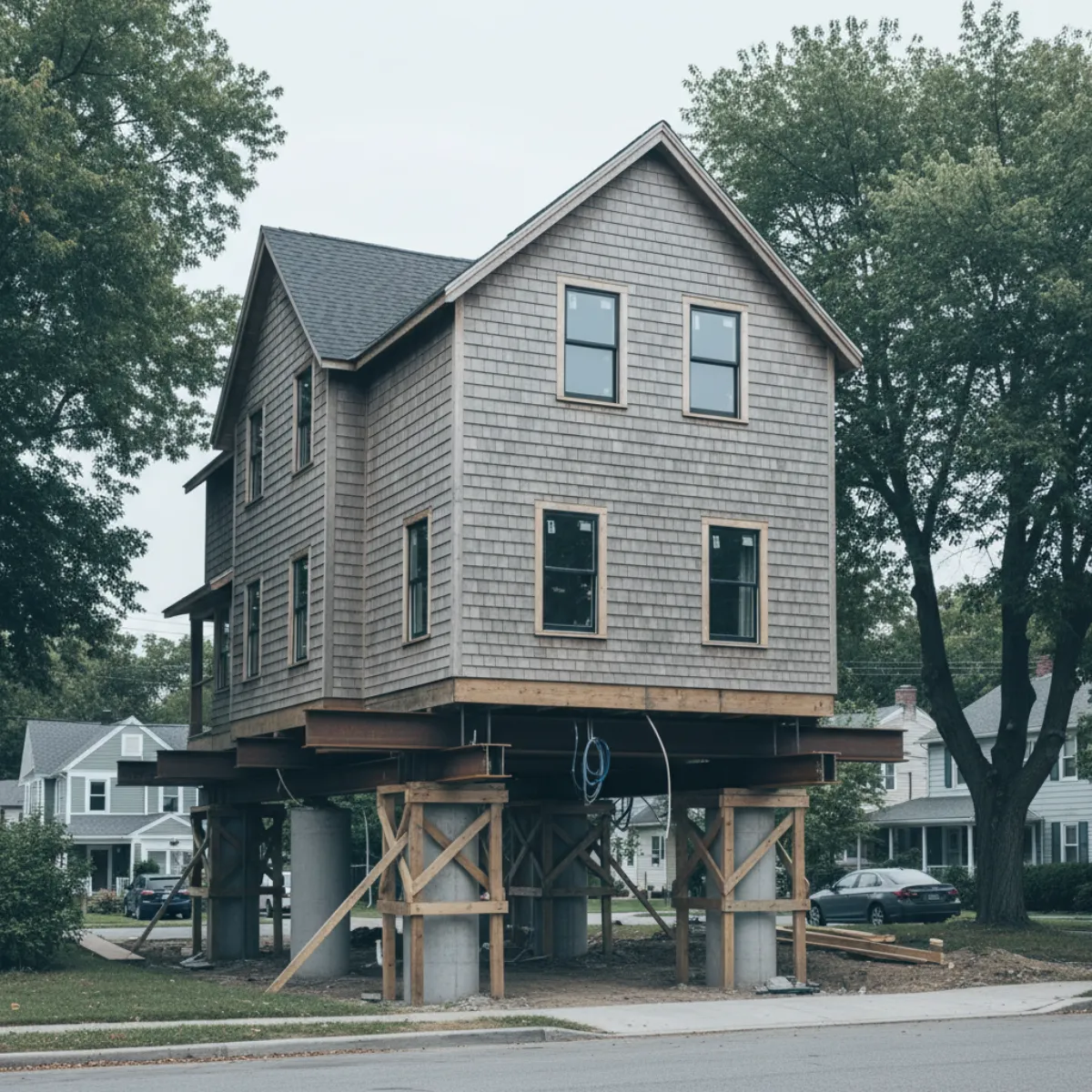
Raising a house costs $20,000 to $80,000 for a typical single-family home, or roughly $10 to $90 per square foot depending on how much of the work is in the contract. Coastal and full foundation-replacement jobs reach $150,000 or more. Most projects run 6 to 12 weeks.
Home elevation is the most expensive flood-mitigation measure a homeowner can take, and also the most effective. It is the one retrofit that moves your living space above Base Flood Elevation (BFE), which is what both flood damage and your insurance premium are priced against. This guide breaks the cost into the parts that actually drive it, so you can read a contractor quote with a clear idea of what is reasonable.
Every figure here is a planning range from aggregate contractor pricing as of 2026, not a quote. Site conditions, your foundation, your lift height, and your region move the number significantly, so treat this as the frame you put a real local bid into.
How much does it cost to raise a house?
The headline range is $20,000 to $80,000 for a typical single-family home. The spread is wide because "raising a house" covers very different scopes of work, from a simple lift to a full foundation rebuild. Pricing is usually expressed two ways: a total project range, and a per-square-foot rate tied to your home's footprint.
| Scope of work | Per sq ft | Typical total |
|---|---|---|
| Lift only (basic) | $10–$18 | $20,000–$40,000 |
| Lift plus partial services | $30–$60 | $40,000–$80,000 |
| Complete turnkey (new foundation) | $60–$90 | $80,000–$150,000+ |
A lift-only price assumes you coordinate the supporting trades (utility disconnects, a new foundation, re-connection) yourself or through separate contracts. A turnkey price folds all of that into one number. When you compare bids, the single most important question is which of these scopes the quote actually covers, because two "elevation" quotes can describe very different amounts of work. If you are still working out who to ask, our verified house-lifting contractor directory lists the firms that do this work by region, each one checked against two independent sources, with state licences and structural-mover association membership recorded where they exist.
Is house raising cost the same as house lifting cost?
Yes. House raising, house lifting and home elevation are names for the same structural job, and in Louisiana the trade usually calls it shoring, so one planning range covers all of them: $20,000 to $80,000 for a typical single-family home. When two quotes sit far apart, compare scope before price. A lift-only bid and a turnkey bid can describe the same house, which is why the scope table above runs from $20,000 to $150,000 or more.
How much does it cost to raise a house in a flood zone?
A flood-zone elevation lands in the same $20,000 to $80,000 band as any other lift, but it is more likely to sit in the upper half of it, and for one structural reason: the target height is not yours to choose. Outside a floodplain you lift the house as far as the job needs. Inside a Special Flood Hazard Area, the lowest floor has to clear BFE by whatever margin your community's ordinance sets, and that margin sets your foundation.
That extra margin is called freeboard. FEMA has long recommended building at least one foot above BFE, and many coastal and repetitive-loss communities now require one to three feet. Each additional foot means taller piers or piles, more cribbing during the lift, longer utility runs, and a longer set of stairs, so a community with a three-foot freeboard rule produces a structurally different, and more expensive, project than a neighbouring one with none. Confirm your required elevation with your local floodplain manager before pricing anything.
Flood-zone jobs also carry paperwork that non-floodplain lifts do not. You will need a floodplain development permit, and after the lift a surveyor has to issue a new elevation certificate documenting the finished floor height. Without that document your insurer has no way to price the improvement, which means the premium saving you paid for does not arrive.
What does it cost by house size?
Because elevation is priced against the footprint the crew has to support, floor area is the most reliable rough sizing tool before you have a bid. These ranges cover the structural lift and typical supporting work, not a full turnkey rebuild.
| Home size | Typical cost |
|---|---|
| 1,000 sq ft | $11,000–$26,000 |
| 1,500 sq ft | $16,000–$36,000 |
| 2,000 sq ft | $21,000–$46,000 |
| 2,500 sq ft | $26,000–$55,000 |
| 3,000 sq ft | $31,000–$60,000 |
Note how slowly the top of the range climbs relative to floor area: tripling the size does not triple the price. Mobilisation, engineering, permits, and utility work are largely fixed, so they are spread across more square feet on a bigger house. That is also why the smallest homes look expensive per square foot and why a very small cottage rarely comes in as cheaply as the per-square-foot rate suggests.
Does foundation type change the cost?
Yes, more than almost any other factor. The cost to lift a house depends heavily on what it sits on now and what it will sit on afterward.
- Pier-and-beam and crawl space are usually cheapest to raise. There is already a void under the floor, so crews can get beams underneath the structure with less excavation.
- Slab-on-grade is harder. The slab has to be separated from the home or lifted with it, which adds engineering and labor.
- Basement homes are the most expensive to work from, because the existing below-grade walls usually have to be rebuilt or filled rather than simply extended.
- Piling and coastal foundations push toward the top of the total range. Driving new piles deep enough for storm surge and wind load is specialised work, which is why Gulf Coast and barrier-island elevations often land near or above $150,000 once the new foundation is included.
| Existing foundation | Typical lift cost |
|---|---|
| Crawl space | $11,000–$25,000 |
| Pier and beam | $12,000–$28,000 |
| Slab-on-grade | $15,000–$40,000 |
| Basement | $25,000–$60,000+ |
Read these as the lift portion only. The new foundation you land on is a separate line, and it is the line that most often decides whether a project finishes at $40,000 or $120,000.
How much does lift height add?
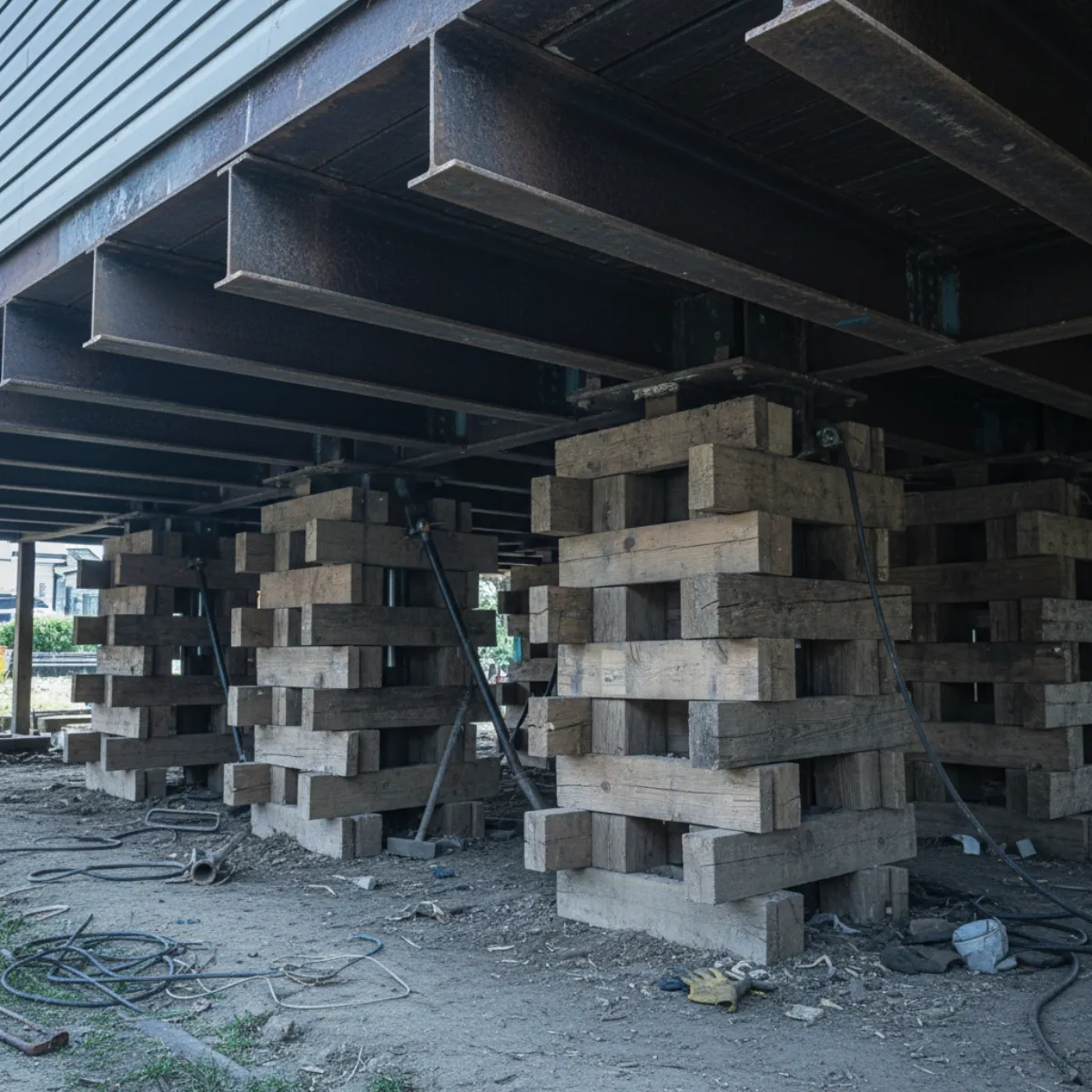
Height is the second big lever, and it works less evenly than people expect. A crew supports the same footprint whether the house goes up two feet or ten, so the first few feet add relatively little. What changes at height is the temporary support: the taller the lift, the more timber cribbing has to be stacked and stabilised while the new foundation is built underneath.
| Lift height | Typical cost |
|---|---|
| 0–5 feet | $12,000–$30,000 |
| 5–10 feet | $17,000–$40,000 |
| 10–15 feet | $30,000–$50,000+ |
Roughly eight feet is the inflection point. Past it, cribbing and stabilisation requirements step up sharply, and aggregate contractor pricing puts the premium on a very high lift in the range of 20% to 40% over an equivalent low lift. Raising a house two feet to clear BFE is a different class of project from putting it a full storey in the air.
There is a counterintuitive argument for going higher anyway. If you have to exceed about four feet, FEMA guidance points toward elevating a full storey, because the space underneath then becomes usable for parking and storage rather than an awkward void, and the additional height buys further premium reduction. The marginal cost of the last few feet is often the cheapest part of the project.
What does it cost to raise a house on pilings?
On the coast the question is usually not whether to lift but what to land on, and pilings are the answer wherever storm surge and wave action rule out solid walls. An open piling foundation lets water pass under the house instead of pushing against it, which is why V-zone construction is built this way.
The piles themselves are not the expensive part. What drives coastal cost is depth and engineering: piles must be driven far enough to resist scour and uplift, the design has to be signed off for local wind load, and access for a pile rig on a narrow barrier-island lot is often difficult. That combination is why a coastal elevation with a new piling foundation is the scenario that pushes a project past $150,000, while the same house on the same lot might be lifted for a fraction of that if it were only landing back on extended masonry piers.
If you are pricing coastal work, treat the geotechnical report and the engineered foundation design as required line items, not optional extras. Regional practice varies enough that it is worth speaking to contractors who work your specific coast; our Florida and Texas Gulf Coast pages list the verified firms working those markets.
The line items most quotes leave out
A lift-only bid can look reassuringly cheap because it excludes the work that surrounds the lift. These are the costs that turn a $25,000 quote into a $60,000 project, and they are the ones to ask about explicitly.
| Item | Typical cost | Notes |
|---|---|---|
| Permits | $500–$6,000 | Varies enormously by jurisdiction; floodplain permits add a step |
| Structural engineer | $100–$500/hr | Design and sign-off; a full report typically runs $1,000–$3,000 |
| Electrician (utility disconnect and reconnect) | $75–$150/hr | Service panel usually has to be relocated upward |
| Plumber | $45–$200/hr | Supply and waste lines are extended to the new floor height |
| New stairs, landings and access | $40–$100/hr labor | A taller house needs more of it, and it must meet code |
| Post-lift elevation certificate | Surveyor fee | Required to reprice your flood insurance |
The permit range is genuinely that wide. Aggregate contractor data puts routine residential permits in the hundreds to low thousands, while quotes from high-regulation coastal jurisdictions with floodplain review show figures in the $4,000 to $6,000 range. Get the number from your building department rather than assuming either end.
Budget separately for somewhere to live. You will be out of the house for part of a six-to-twelve-week project, and temporary accommodation is real money that almost never appears in a contractor's bid.
How do you estimate house lifting cost for your own home?
Start from floor area, then adjust for foundation, height and whatever the quote leaves out:
- Floor area sets the band: $11,000 to $26,000 at 1,000 sq ft, up to $31,000 to $60,000 at 3,000 sq ft.
- Foundation and height place you in it: crawl space and pier-and-beam toward the low end, basements and lifts past about eight feet toward the top.
- Add what the bid leaves out from the table above: permits, engineering, utility work, stairs and the post-lift elevation certificate.
- Net out grants and insurance last. The Payback Estimator does both.
Why does the same house cost more in one state than another?
We do not publish a state-by-state price table, because no defensible dataset supports one. Elevation is priced per project by a small number of specialist firms, and the sample per state is too thin to average honestly. What we can identify is which factors reliably move the number:
- Required freeboard. A community that mandates three feet above BFE is buying a taller foundation than one that mandates none. This is the single biggest state-and-local variable.
- Prevailing foundation type. Louisiana and coastal Texas have large pier-and-beam housing stocks, which lift comparatively easily. Slab-on-grade regions start from a harder position.
- Coastal engineering load. V-zone wind and surge design, pile depth, and geotechnical work add cost that inland floodplain jobs never see.
- Licensing and permit regime. States with dedicated elevation contractor registration and floodplain review add process cost, and time. Texas has no statewide general contractor licence at all, so verification falls to association membership and local records instead.
- Access. A narrow barrier-island lot or a dense urban block limits equipment, and that shows up as labor.
The practical move is to compare bids inside your own market rather than against a national average. Our provider directory is organised by flood region for exactly that reason, and each regional flood-risk page sets out the local licensing anchors you can check a contractor against.
Will FEMA pay to elevate my home?
Often, partially, but not directly to you. Structure elevation is a named eligible activity under FEMA's Flood Mitigation Assistance program, and the federal cost-share is typically 75%, rising to 90% for repetitive-loss homes and up to 100% for severe repetitive-loss properties. The catch is that homeowners do not apply to FEMA directly. Your community or state applies on your behalf, and the grants are competitive.
If your home was substantially damaged in a flood, your NFIP policy may also include Increased Cost of Compliance coverage of up to $30,000 toward elevation. We cover both funding paths in detail in FEMA flood mitigation grants and ICC and the 50% rule.
How much does elevation lower flood insurance?
This is where the math turns. Under Risk Rating 2.0, elevating your lowest floor above BFE is the strongest premium-reduction step available. FEMA indicates that raising a home one foot above BFE can cut the annual premium by roughly 30%, and additional height compounds the effect.
That ongoing saving is what makes a five-figure elevation defensible over time, especially when a grant covers most of the upfront cost. To see how the out-of-pocket number, the premium reduction, and the payback period fit together for your situation, run your figures through the Payback Estimator. For the full set of premium levers, see how to lower your flood insurance.
Is elevating worth it?
For a home that floods repeatedly or sits below BFE, elevation is frequently the measure that ends the problem rather than managing it. One inch of water can cause up to $25,000 in damage, and the average flood claim runs about $52,000, so avoiding a single serious flood can offset a large share of the cost to raise the house. Weigh that against cheaper partial measures like flood vents in our full breakdown of whether flood mitigation is worth it.
Price ranges on this page come from aggregate contractor pricing as of 2026 and federal program rules from primary sources. See how we source our numbers for the full list.
Frequently asked
How much does it cost to raise a house?
How much does it cost to raise a house 10 feet?
How much does it cost to raise a 2,000 sq ft house?
How much does it cost to lift a 1,000 sq ft house?
Does foundation type change the cost?
How much are permits for a house elevation?
Will FEMA pay to elevate my home?
How much does elevation lower flood insurance?
Is raising a house worth it?
How long does house lifting take?
Estimate your real number
Run your mitigation cost, current premium and flood-risk status through the Payback Estimator: net cost after grants, lower insurance, and the payback in years.